
Practical insights from the field of data and analytics
Last updated
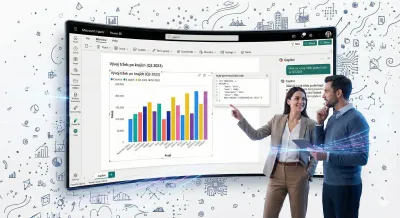
Copilot in Microsoft Fabric and Power BI
Copilot in Microsoft Fabric and Power BI is fundamentally changing the way companies work with data. By generating reports, analyses, and DAX calculations using natural language, analytics becomes more accessible to business users and accelerates the path from question to decision. This article demonstrates the practical use of Copilot, its benefits for a modern data platform, and the limitations that must be considered from the perspective of data architecture and governance.
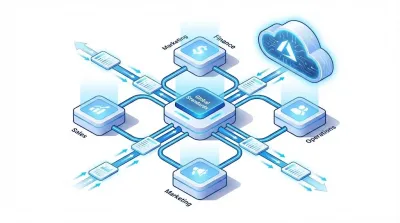
Data Mesh in Practice: Implementation Using Domains
Data Mesh introduces a new way of working with data in large organizations: responsibility for data products shifts from a central team directly to the individual domains that know the data best. This article explains how to set up domain ownership, federated governance, and a self-service data platform in practice, ensuring that decentralization does not undermine unified standards. It also includes specific recommendations for technologies within the Microsoft Azure ecosystem to ensure a scalable and secure implementation.
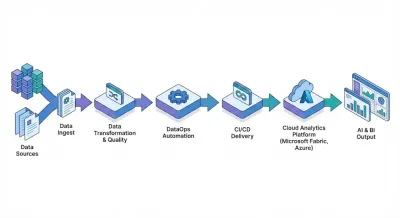
DataOps and Data Pipeline Automation
DataOps applies DevOps principles to the data domain: it standardizes and automates the development and operation of data pipelines, from ingestion through transformation and quality checks to controlled deployment. The result is faster delivery of data outputs, as well as greater reliability, auditability, and reusability of solutions.
Favorites
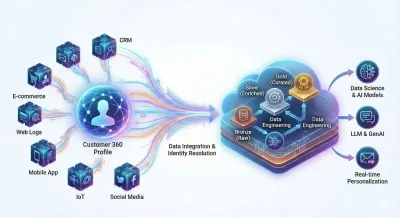
Customer 360
Creating a unified Customer 360 profile is not just a marketing goal, but a complex architectural challenge. This article analyzes the necessary transition to Data Lakehouse architecture in the Microsoft Fabric and Azure ecosystem. Learn how to build a modern data platform that serves as a robust foundation for advanced cloud analytics and hyper-personalized communications using AI and LLM.
Propensity to Buy
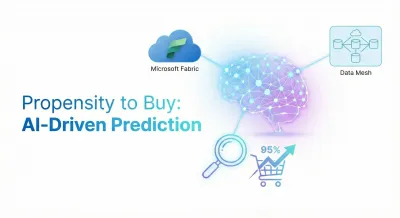
How can raw data be transformed into accurate predictions of purchasing behavior? The Propensity to Buy model represents the gold standard of data monetization, but its success stands or falls on the chosen architecture. In this article, we will explore the technical background of implementation in Microsoft Fabric and Azure environments. Learn how to leverage Data Lakehouse principles, advanced machine learning, and generative AI to identify customers with the highest potential—and how to orchestrate it all in a modern, scalable infrastructure.
Server-Side Tracking
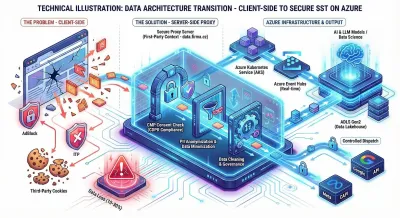
Server-side tracking represents a major shift in digital analytics amid the end of third-party cookies and growing privacy concerns. Shifting measurement to the server allows companies to obtain more accurate marketing data, bypass technical limitations of browsers and ad blockers, and maintain full control over data flows. This article explains how SST fits into modern data architecture and when it becomes a strategic component of cloud analytics.
RAG over company data
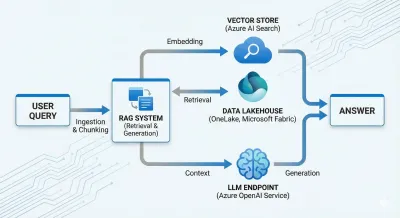
Want to deploy generative AI on top of your company's own know-how without the risk of hallucinations? This technical deep dive into RAG architecture shows that AI success stands and falls with quality data engineering and data architecture. Explore how to build a modern data platform for AI based on Microsoft Fabric and Azure Data Lakehouse and how to overcome the challenges of data vectorization, security, and transition to a production enterprise environment.
Propensity to Buy
How can you transform raw data into accurate predictions of purchasing behavior? The Propensity to Buy model represents the gold standard of data monetization, but its success depends entirely on the chosen architecture. In this article, we’ll explore the technical background of implementation in Microsoft Fabric and Azure environments. Discover how to leverage Data Lakehouse principles, advanced machine learning, and generative AI to identify customers with the highest potential—and how to orchestrate it all within a modern, scalable infrastructure.
AI Governance in the Financial Sector
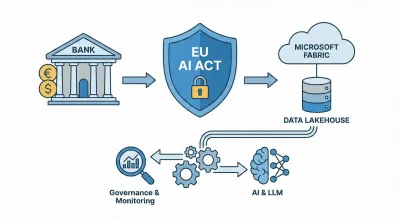
Artificial intelligence is becoming a key tool in the financial sector for risk management, credit scoring, and decision-making automation—but it is also attracting increasing attention from regulators. The new EU AI Act and AI governance principles provide banks and insurance companies with clear rules on how to design, operate, and monitor AI so that it is transparent, auditable, and ethically responsible. This article summarizes the main impacts of the regulation on financial institutions and demonstrates how to effectively implement AI governance on a modern data platform.